
Introduction: The Critical Role of Water Slag in Aerated Concrete
Aerated concrete, also known as autoclaved aerated concrete (AAC), is a lightweight, precast building material prized for its excellent thermal insulation, fire resistance, and structural efficiency. A key factor in achieving its desirable properties is the precise formulation of its raw materials, where finely ground industrial by-products like granulated blast furnace slag (GBFS), or water slag, play a pivotal role. Water slag, when activated, contributes to the pozzolanic reaction, enhancing the long-term strength, durability, and dimensional stability of AAC blocks. However, the performance of water slag is intrinsically linked to its fineness and particle size distribution. This article provides a comprehensive overview of the essential equipment required for processing water slag into a high-quality additive for AAC manufacturing, with a focus on grinding and classification technologies.
The Importance of Particle Size in Water Slag Additives
The reactivity of water slag is a direct function of its specific surface area. Coarse particles have limited surface area available for the chemical reactions that contribute to strength development. Finely ground slag, with a significantly increased surface area, reacts more completely and rapidly with calcium hydroxide (from lime or cement) during the autoclaving process. This leads to:
- Higher Ultimate Strength: Enhanced formation of calcium silicate hydrate (C-S-H) gel.
- Improved Microstructure: Denser, more homogeneous matrix reducing porosity.
- Optimized Pore Structure: Beneficial for the even distribution of aluminum powder reaction gases during AAC cake formation.
- Resource Efficiency: Maximizes the utilization of industrial waste, promoting sustainable construction.
Therefore, the core of a water slag processing plant is a robust, efficient, and precise grinding system capable of delivering a consistent product with the required fineness, typically ranging from 325 mesh (45μm) to ultra-fine levels exceeding 1000 mesh.
Core Equipment for Water Slag Grinding and Processing
The production line for water slag powder involves several key stages, each requiring specialized equipment.
1. Raw Material Handling and Pre-Crushing
Granulated blast furnace slag is typically received in a granular form with variable moisture content and lump size.
- Feeders & Conveyors: Belt feeders, vibrating feeders, and enclosed belt conveyors ensure a steady, controlled supply of raw slag to the processing line.
- Drying System: If the slag moisture is too high (>1% for most fine grinding mills), a dryer (e.g., rotary dryer) is necessary to prevent clogging and ensure grinding efficiency.
- Primary Crusher: For larger lumps, a jaw crusher or hammer mill is used to reduce the feed size to a range suitable for the main grinding mill (typically below 20-50mm). A Hammer Mill is particularly effective here due to its high reduction ratio and ability to handle moderately abrasive materials, producing a 0-3mm product ideal for subsequent fine grinding.
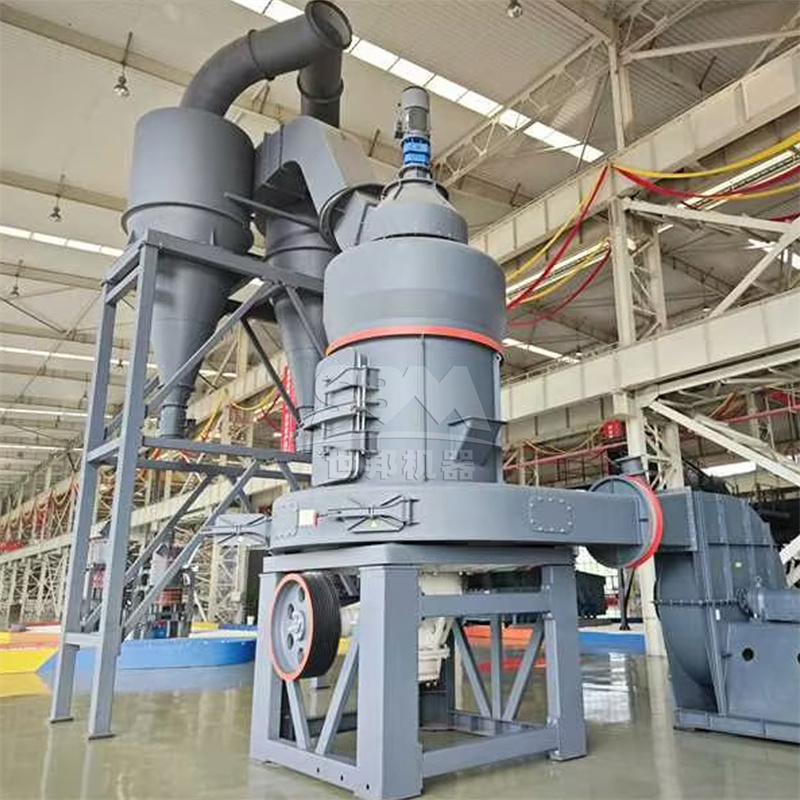
2. The Heart of the Process: Fine Grinding Mills
This is the most critical and energy-intensive section. The choice of grinding mill depends on the target fineness, required capacity, and overall operational cost (capital and energy).
- Ball Mill: The traditional workhorse for slag grinding. It is reliable and capable of producing a wide range of fineness. However, it suffers from high energy consumption (only 1-3% of energy is used for actual particle breakage), significant wear, high noise levels, and a large footprint. For modern, high-efficiency plants, it is often considered less optimal.
- Vertical Roller Mill (VRM): A highly efficient and dominant solution for slag grinding. VRMs like the LM Series Vertical Roller Mill integrate crushing, grinding, drying, and classification in a single unit. Material is ground between rollers and a rotating table. Their advantages are profound:
- Energy Efficiency: 30-40% lower energy consumption compared to ball mills.
- Compact Design: Integrated system reduces floor space by up to 50%.
- Excellent Drying Capability: Can handle materials with higher moisture content by utilizing hot gas from a kiln or auxiliary heater.
- Precise Particle Control: Coupled with an internal dynamic classifier, it offers good control over product fineness, suitable for producing slag powder in the 400-550 m²/kg Blaine range.
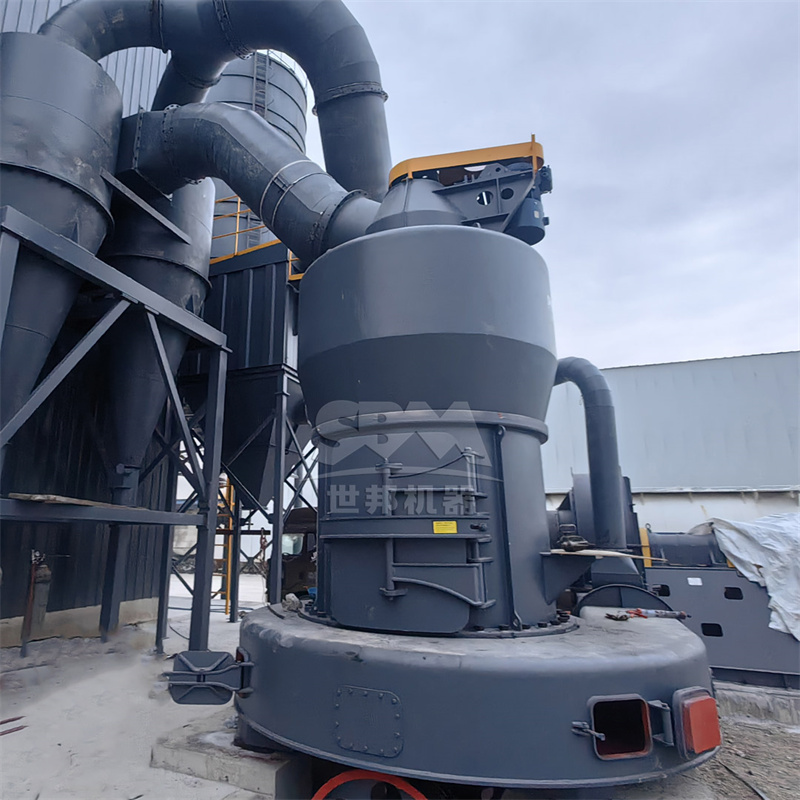
- Ultrafine Grinding Mill: To achieve the highest levels of fineness and reactivity (e.g., 2500 mesh or 5μm), specialized ultrafine mills are required. The SCM Series Ultrafine Mill is engineered for this exact purpose. Utilizing a three-layer ring and roller grinding mechanism, it applies layer-by-layer grinding principle for exceptional efficiency. Its high-precision vertical turbine classifier ensures no coarse powder is mixed into the final product, guaranteeing uniformity. For AAC manufacturers seeking to maximize the pozzolanic activity of their slag additive and potentially reduce binder content, integrating an SCM Ultrafine Mill for final product polishing or for producing specialty high-grade slag powder is a strategic investment that enhances product performance.
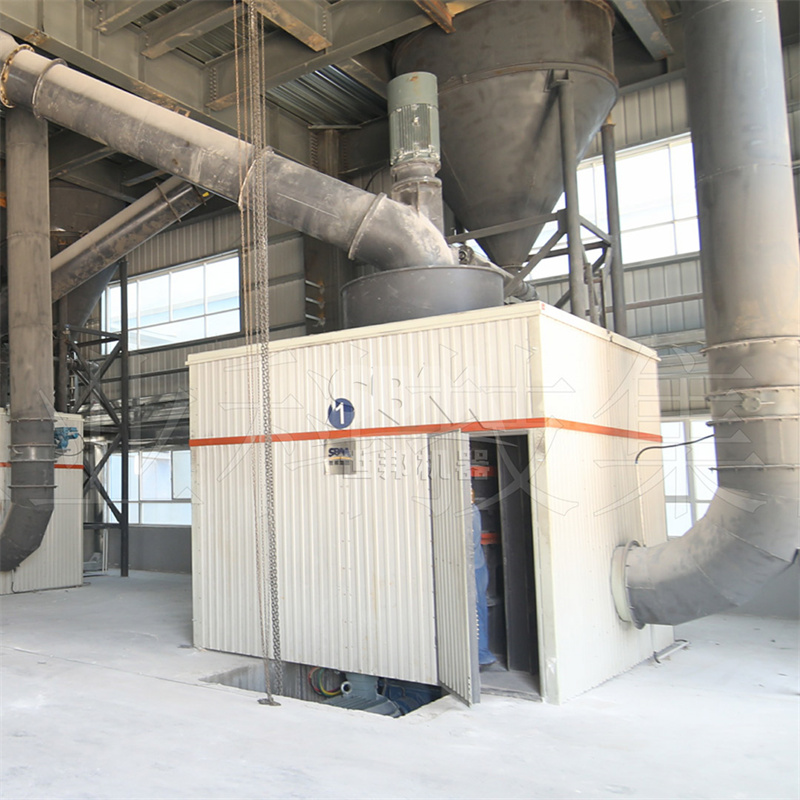
3. Classification and Separation
Not all material exiting the mill meets the target fineness. Classification systems are crucial for recycling coarse particles and ensuring product quality.
- Dynamic Classifier (Integrated): Modern VRMs and ultrafine mills have built-in high-efficiency classifiers (often turbine type) that separate fine powder from coarse grits in the gas stream. The coarse material is returned to the grinding bed for further comminution.
- Separate Air Classifier: In ball mill circuits or for final product refinement, a standalone high-efficiency air classifier (e.g., vortex or turbine type) can be installed in a closed circuit to precisely cut the particle size.
4. Product Collection, Storage, and Auxiliary Systems
- Dust Collection: A high-efficiency pulse jet baghouse dust collector is mandatory. It captures over 99.9% of the fine powder from the mill and classifier exhaust, ensuring environmental compliance and product recovery. Systems like those integrated into our MTW Series European Trapezium Mill feature advanced pulse technology that exceeds international emission standards.
- Product Conveying & Storage: The collected fine slag powder is conveyed via screw conveyors or air slides to large storage silos. Silos are equipped with aeration pads to prevent compaction and ensure smooth discharge.
- Packaging & Dispatch: For bulk dispatch, tanker loading systems are used. For bagged product, automated valve bag packers or big bag stations are employed.
- Electrical & Control System: A centralized PLC-based control system automates the entire process, monitoring key parameters like mill load, temperature, pressure, and fineness, ensuring stable and optimal operation.
Recommended Equipment Solutions for AAC Producers
Selecting the right equipment combination is vital for profitability and product quality. Based on common production scales and fineness requirements for AAC slag additives, we recommend the following solutions from our portfolio:
1. For High-Capacity Production (30-100 t/h) of Standard Slag Powder (~450 m²/kg)
The LM Series Vertical Roller Mill (e.g., LM220K) is the ideal primary grinding solution. Its integrated design slashes infrastructure costs by 40%, while its low operating cost—thanks to a 30-40% energy saving versus ball mills and dramatically extended wear part life—ensures a rapid return on investment. The intelligent control system allows for remote monitoring and stable operation, crucial for consistent AAC raw material quality. Its ability to handle slight moisture variations and its environmental compliance make it a robust and future-proof choice for large-scale AAC component manufacturers.
2. For Premium/Ultrafine Slag Additive Production (5-25 t/h, up to 2500 mesh)
To unlock the full pozzolanic potential of slag and create a high-value additive that can enhance AAC performance or allow for innovative mix designs, the SCM Series Ultrafine Mill is unmatched. Its capacity is twice that of traditional jet mills with 30% lower energy consumption. The high-precision classification guarantees a uniform, coarse-free product, which is essential for predictable AAC reactions. For AAC producers aiming at the premium segment of the market or seeking to improve the strength-to-weight ratio of their blocks, investing in an SCM Ultrafine Mill for dedicated slag processing is a definitive technological advantage.
Conclusion
Producing high-quality water slag additives for aerated concrete is a technologically driven process centered on efficient and precise comminution. Moving beyond traditional, energy-intensive ball mills, modern plants are adopting integrated vertical roller mills for mainstream production and advanced ultrafine mills for high-reactivity products. A complete system encompassing pre-crushing, efficient grinding with precise classification, and thorough dust collection is essential. By investing in the right equipment—such as the energy-efficient LM Vertical Roller Mill for large volumes or the high-precision SCM Ultrafine Mill for premium products—AAC manufacturers can ensure a reliable supply of superior slag powder, leading to enhanced concrete performance, cost optimization, and a stronger commitment to sustainable industrial ecology.