
Introduction to Bentonite Powder Production
Bentonite, a versatile clay mineral primarily composed of montmorillonite, is widely used in drilling fluids, foundry binders, pelletizing, and construction. Its powder production requires specialized grinding equipment to achieve specific fineness levels, typically ranging from 30 mesh (coarse) to 2500 mesh (ultrafine). This guide provides a comprehensive overview of the machinery used in bentonite processing, from primary crushing to fine grinding and classification, helping you select the right equipment for your production needs.
Primary Crushing Equipment
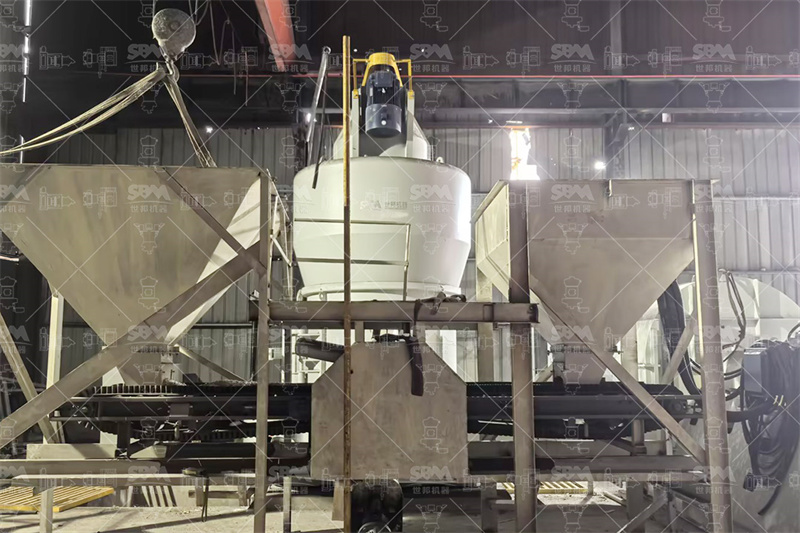
Raw bentonite ore, often with a moisture content of 15-30%, first undergoes primary crushing. Hammer mills are commonly used for this stage due to their high capacity and ability to handle sticky materials. The hammer mill reduces large lumps (up to 40mm) to a finer size (0-3mm) suitable for subsequent grinding. Key advantages include a compact structure, low investment cost, and wear-resistant liners made of high manganese steel. For larger operations, jaw crushers may precede the hammer mill to handle boulders exceeding 100mm.
Drying and Dehydration Systems
Bentonite often requires drying before fine grinding to reduce moisture content below 8%. Rotary dryers or flash dryers are employed, with hot air temperatures reaching 600-800°C. The dried material is then conveyed to storage bins. Some integrated grinding systems, like vertical roller mills, can handle materials with moderate moisture by utilizing hot air circulation during the grinding process.
Grinding Mills for Bentonite
The core of any bentonite powder plant is the grinding mill. The choice depends on required fineness, capacity, and energy efficiency. Below are the most suitable mill types.
1. Raymond Mill and Pendulum Mills (30-325 mesh)
Traditional Raymond mills and advanced pendulum mills like the MRN Pendulum Mill are excellent for coarse to medium-fine bentonite powder (30-325 mesh). The MRN series features thin oil lubrication for maintenance-free operation, an efficient square-pipe dust collector, and a pulse dust collector for eco-friendly processing. With feed sizes up to 50mm and capacities ranging from 2.7 to 83 TPH, it is ideal for large-scale bentonite production. The pendulum mill operates on the principle of centrifugal force: grinding rollers swing outward to press against the grinding ring, crushing the material layer. This design ensures high throughput and consistent product quality.
2. European Trapezium Mill (30-325 mesh)
The MTW Series European Trapezium Mill is another top choice for bentonite grinding in the 30-325 mesh range. Its integral bevel gear drive achieves 98% transmission efficiency, while the anti-wear shovel design reduces maintenance costs. The optimized arc air duct minimizes energy loss, and the wear-resistant volute structure improves air selection efficiency. Models like the MTW138Z (6-17 t/h) and MTW175G (9.5-25 t/h) are popular for medium to large bentonite plants. The trapezium mill uses a unique curved grinding roller and ring design to create a material layer, ensuring efficient crushing through extrusion and classification.
3. Vertical Roller Mill (30-600 mesh)
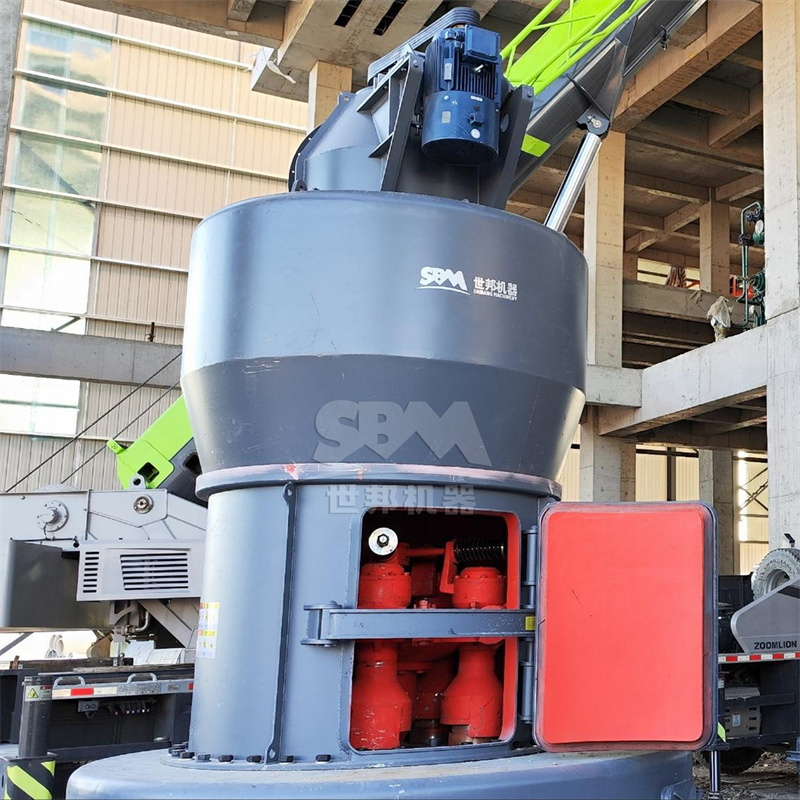
For high-capacity bentonite production with integrated drying and grinding, the LM Series Vertical Roller Mill is unequaled. Its integrated design combines crushing, grinding, drying, and classification in one system, reducing floor space by 50% and infrastructure costs by 40%. Energy consumption is 30-40% lower than ball mill systems. The LM series can handle feed sizes up to 50mm and produce fineness from 30 mesh to 600 mesh (with special fine-powder models). The LM130K to LM280K models, with capacities from 10 to 170 t/h, are ideal for large mining operations. The mill uses a grinding table and rollers to crush the material bed, with hot air lifting fine particles to the classifier. Its intelligent control system allows remote monitoring and real-time parameter adjustment.
4. Ultrafine Mills (325-2500 mesh)
When bentonite requires ultrafine powders for high-value applications like cosmetics, pharmaceuticals, or nano-composites, ultrafine grinding mills are essential. The SCM Series Ultrafine Mill and LUM Ultrafine Vertical Roller Mill are specifically designed for fineness between 325 and 2500 mesh (5-45 microns). The SCM series achieves capacity twice that of jet mills with 30% lower energy consumption. Its vertical turbine classifier ensures no coarse powder mixing. Models range from the SCM800 (0.5-4.5 t/h) to the SCM1680 (5-25 t/h). The LUM series uses multi-rotor classification technology for precise particle size control. These mills are ideal for producing bentonite powders with specific surface areas exceeding 10,000 cm²/g.
5. Ball Mill (0.074-0.8mm)
Ball mills are traditional but still widely used for bentonite grinding, especially in wet processing for drilling fluid applications. The GMQG/GMQY series ball mills offer capacities from 0.65 to 450 t/h with fineness ranging from 0.074mm to 0.8mm. They can operate in dry or wet mode, making them versatile for mineral processing. The crushing ratio can reach 300:1, and the fineness is continuously adjustable. Large models like the GMQY3685 (400-45 t/h) use 6-10KV high-voltage motors for energy efficiency. However, ball mills consume more energy than vertical roller mills for the same throughput.
Classification and Separation Systems
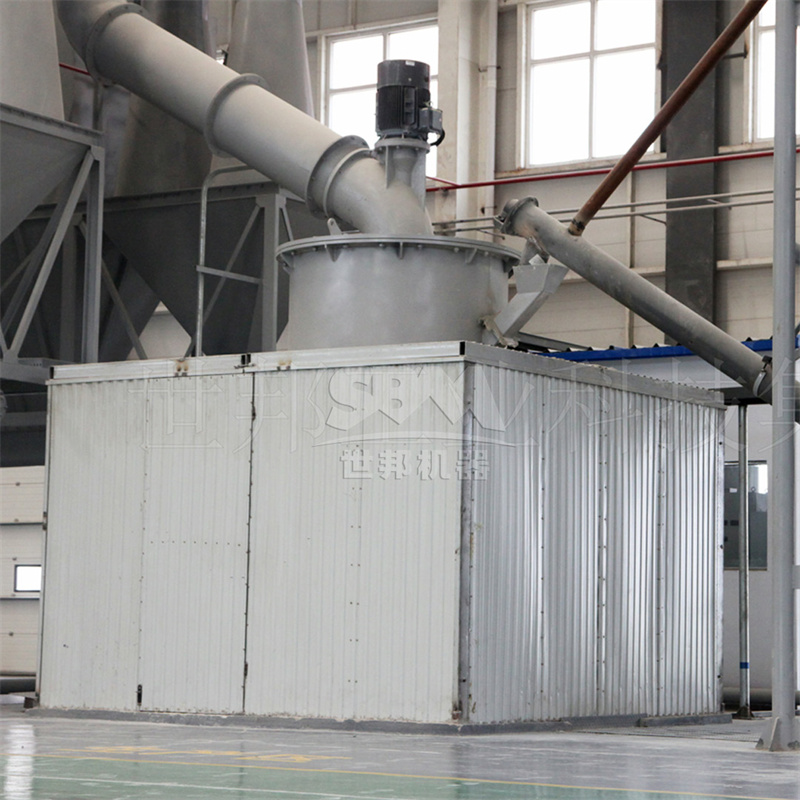
After grinding, the powder must be classified to ensure uniform particle size. Most modern mills integrate dynamic classifiers. For standalone classification, air classifiers or sieving machines may be used. Pulse dust collectors (e.g., baghouse filters) are essential to capture fine particles and ensure emissions meet environmental standards. The SCM ultrafine mill uses a high-efficiency pulse dust removal system that exceeds international standards, while the MTW mill features a soundproof room design for noise reduction below 85dB.
Auxiliary Equipment
Complete bentonite powder production lines also include feeders (vibrating or belt), bucket elevators, screw conveyors, storage silos, and packing machines. Intelligent control systems (PLCs) automate the entire process, from feeding to packaging, reducing labor costs and human error. The LM series vertical roller mill offers expert-level auto-control with remote/local switching capability.
Selecting the Right Mill: A Comparison
| Mill Type | Fineness Range | Capacity | Best Application |
|---|---|---|---|
| Hammer Mill | 0-3 mm | 8-70 t/h | Primary crushing |
| MRN Pendulum Mill | 30-325 mesh | 2.7-83 t/h | Coarse to medium bentonite |
| MTW Trapezium Mill | 30-325 mesh | 3-45 t/h | Medium fineness, high efficiency |
| LM Vertical Roller Mill | 30-600 mesh | 3-250 t/h | Large capacity, integrated drying |
| SCM Ultrafine Mill | 325-2500 mesh | 0.5-25 t/h | Ultrafine powders, high value |
| Ball Mill | 0.074-0.8 mm | 0.65-450 t/h | Wet or dry, versatile |
Recommended Products for Your Bentonite Plant
Based on your specific requirements, we highly recommend two advanced solutions:
1. SCM Series Ultrafine Mill – If your goal is to produce high-value ultrafine bentonite powder (325-2500 mesh) for premium applications like drilling fluids, cosmetics, or pharmaceuticals, the SCM series offers unbeatable efficiency. With capacity twice that of jet mills and 30% lower energy consumption, plus intelligent control with automatic particle size feedback, it ensures consistent product quality. The shaftless screw grinding chamber and durable roller components guarantee long service life. Available in models from SCM800 to SCM1680, it covers capacities from 0.5 to 25 t/h.
2. MTW Series European Trapezium Mill – For medium-fineness bentonite (30-325 mesh) with high throughput requirements, the MTW series is an excellent choice. Its integral bevel gear drive (98% efficiency) and optimized arc air duct minimize operating costs. The combined shovel blades and curved roller design extend equipment life, while the pulse dust collector ensures eco-friendly operation. Models like the MTW138Z (6-17 t/h) and MTW175G (9.5-25 t/h) are ideal for medium to large plants.
Conclusion
Bentonite powder production requires careful selection of grinding equipment based on desired fineness, capacity, and operational cost. From primary hammer mills to advanced ultrafine mills, each machine plays a critical role. The trend toward integrated systems like vertical roller mills and intelligent ultrafine mills is driven by demands for higher efficiency, lower energy consumption, and environmental compliance. By choosing the right combination of equipment, you can maximize productivity and product quality. For expert advice tailored to your specific bentonite project, consult with experienced mill manufacturers who can provide custom solutions.